
Printing a program, guide or catalogue? Nine practical ways to get eco-friendly booklet printing right, from recycled paper to print quantities and finishes.
Booklets are one of the most useful things an organisation prints. An event program, a welcome guide or a product catalogue gets picked up, carried around and kept. But every booklet also uses paper, ink, energy and freight. The good news is that eco-friendly booklet printing mostly comes down to decisions made before your booklet goes to press, by choices you make in planning and design.
1. Choose 100% recycled paper for eco-friendly booklet printing
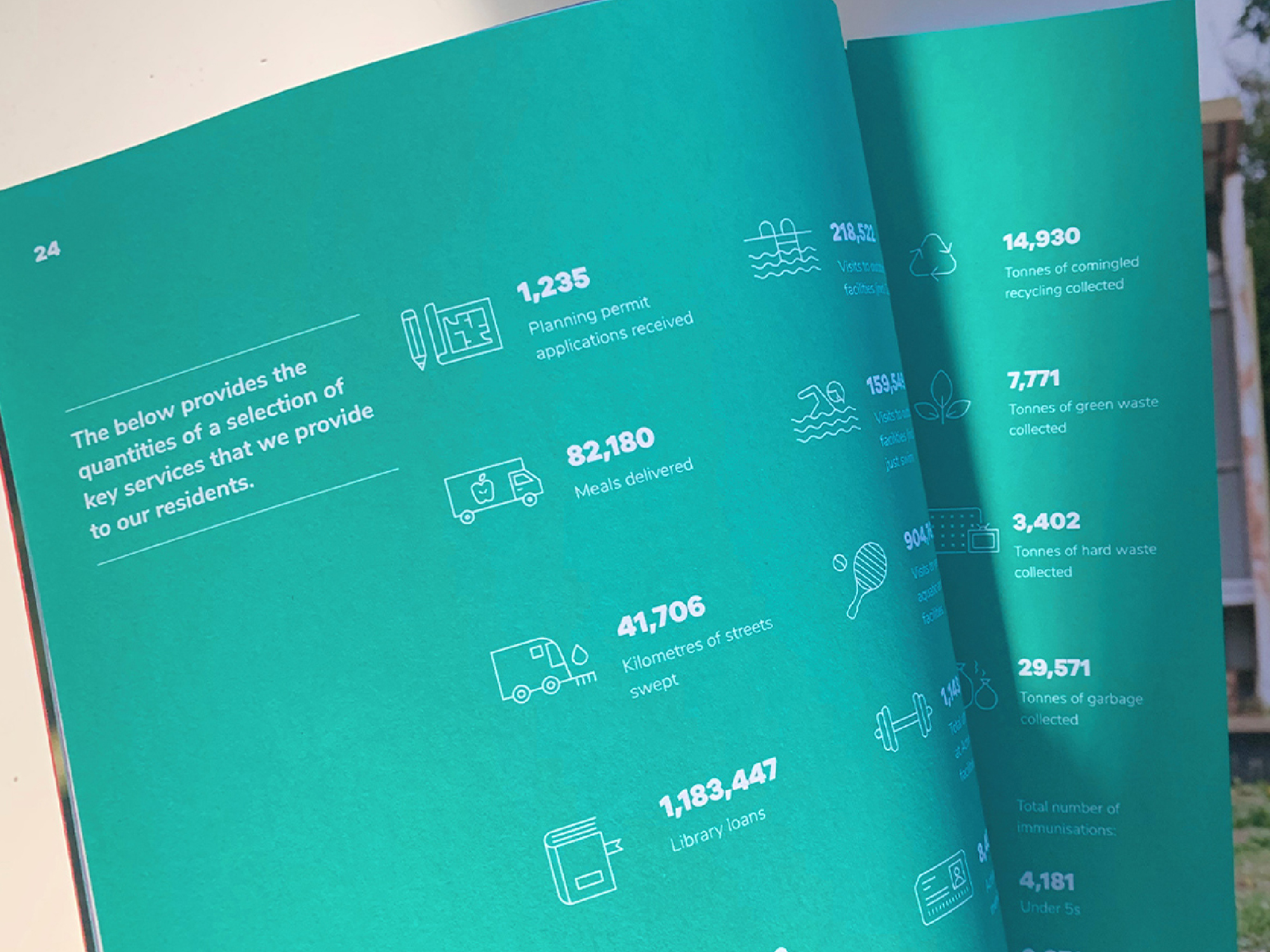
Paper is the biggest part of a booklet’s environmental impact, so it’s the most important choice. Recycling white office paper uses 44% less energy, produces 50% less wastewater and generates 38% fewer carbon emissions than making paper from virgin fibre. Look for stock that’s 100% post-consumer recycled, meaning it’s made from paper people have already used, and FSC certified.
Recycled paper no longer means grey and rough. Premium recycled stocks like EcoStar come in a smooth silk finish for photos and a natural uncoated finish for text-heavy booklets. Read more in our guide to choosing paper.
2. Print what you’ll actually use
The greenest booklet is the one that doesn’t end up in a storeroom or recycling bin. Offset printing used to make big runs the only economical option, but digital printing makes short runs affordable. Order for the event or season you’re planning, then reprint if you need more.
3. Write content that lasts, so you don’t reprint
Dates, staff names and prices date a booklet quickly. Where you can, keep time-sensitive details out of the printed version and point readers to a web page or QR code. A guide that stays accurate for two years means one print run instead of three.
4. Use a standard size
A4 and A5 booklets are designed to fit efficiently on standard press sheets. Custom sizes can leave more offcuts and cost more. If you need something unusual, ask your printer how to size it to waste as little as possible.
5. Consider a self cover
A self cover uses the same paper as the inside pages instead of a heavier card cover. It uses less material and suits programs, newsletters and internal documents. Save the heavier custom cover for booklets that need to stand up to handling or sit on a shelf.
6. Skip the plastic
Gloss lamination puts a thin layer of plastic on the cover, which makes the booklet harder to recycle. Foils and glitter add non-paper materials too. Australia’s book publishing industry has recommended reducing or eliminating glitter and foil for this reason (Australian Publishers Association). A well-designed uncoated cover on good recycled card looks premium without them.
7. Choose the simplest binding that works for eco-friendly booklet printing
Saddle stitching uses just two small staples, so it’s the lightest-touch binding for slimmer booklets. Perfect binding adds glue, and wire binding adds a metal coil. Choose based on page count and how the booklet will be used, and don’t upgrade the binding unless it adds real value. See saddle stitch vs perfect bound vs wire bound.
8. Get your files right first time
Reprints caused by artwork errors double the paper, ink and freight. Checking bleed, image resolution and page count before you send saves waste as well as time. Our guide on how to set up your booklet artwork walks you through it.
9. Say what you did, accurately
Tell readers how your booklet was printed, for example “Printed on 100% recycled paper” on the back cover. It shows your values and encourages recycling. Keep the claim specific and true: say “100% recycled paper” rather than vague words like “eco” or “carbon neutral” unless you can back them up.
Start your eco-friendly booklet printing
At Ethical Print Co., every standard booklet is printed on 100% post-consumer recycled EcoStar paper, digitally wherever possible, and we plant a tree for every project. Explore our recycled booklet printing or read how to make your annual report printing more sustainable.
- Eco-friendly booklet printing: 9 ways to reduce your impact
- How to set up your booklet artwork for print
- Saddle stitch vs perfect bound vs wire bound: which booklet binding is right for you?
- Wall Calendar vs Desk Calendar: Which Should Your Organisation Print?
- Eco Printing for Nonprofits: How to Reduce the Environmental Impact of Campaign Materials