
Not sure how to bind your booklet? Compare saddle stitch vs perfect bound vs wire bound by page count, look, cost and use, with a quick way to decide.
Saddle stitch vs perfect bound vs wire bound: the binding you choose changes how your booklet looks, feels, opens and lasts. It also decides how many pages you can have. Most of the time, your page count and paper thickness make the decision for you. Here’s how the three most common booklet bindings compare, and how to pick the right one.
Saddle stitch vs perfect bound: the quick answer
| Saddle stitch | Perfect bound | Wire bound | |
|---|---|---|---|
| How it’s bound | Folded sheets stapled through the spine | Pages glued into a wrap-around cover | Pages punched and bound with a wire coil |
| Best for | Programs, guides, newsletters, short reports | Catalogues, manuals, annual reports, books | Workbooks, manuals, recipe books, planners |
| Page count | From 8, in multiples of 4. Up to about 64 on light paper | Typically from 28 to 40, in even numbers, up to 200+ | From 8, in even numbers |
| Lies flat? | Mostly | No | Yes, and folds back 360° |
| Printed spine? | No | Yes | No |
| Cost | Lowest | Higher | Higher |
In short, when you weigh up saddle stitch vs perfect bound, page count usually decides it: thinner booklets suit staples, thicker ones suit a glued spine. Both are long-established bookbinding methods, and both work beautifully on recycled paper.
Saddle stitch: the affordable all-rounder
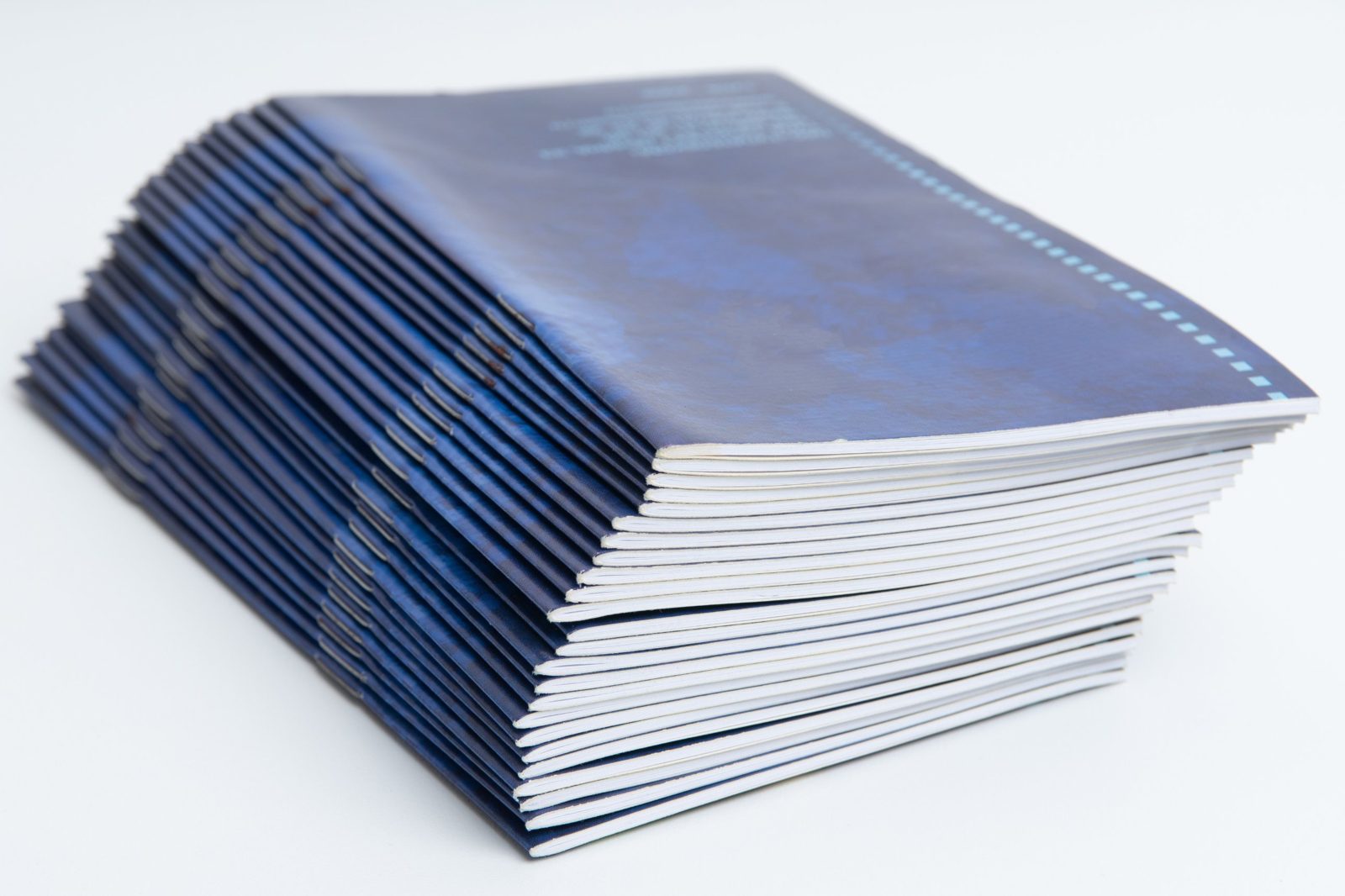
Saddle stitching is the most common booklet binding. Large sheets are printed, folded in half, nested inside each other and stapled through the fold. It’s fast, affordable and looks clean, which makes it the go-to for event programs, guides, newsletters and shorter reports.
Because every sheet folds to make four pages, your page count must be a multiple of four: 8, 12, 16, 20 and so on. If your document comes to 22 pages, you’ll need to cut two or add two (a notes page or a full-page image works well).
There’s also an upper limit. As more sheets are nested, the booklet gets bulky at the spine and won’t close neatly. On lighter text-weight paper (roughly 75 to 105gsm), up to about 64 pages is generally fine. On heavier text paper (up to about 150gsm), around 40 pages or fewer lie flat without the spine bubbling open. Uncoated stocks are bulkier than coated stocks of the same weight, so the limit can be lower.
One thing designers should know about is creep. In thicker saddle-stitched booklets, the inner pages push out further than the outer ones, so they lose a little more at the trim. Keep text and important elements well inside the safe area so nothing gets cut.
Perfect bound: the professional, book-like finish
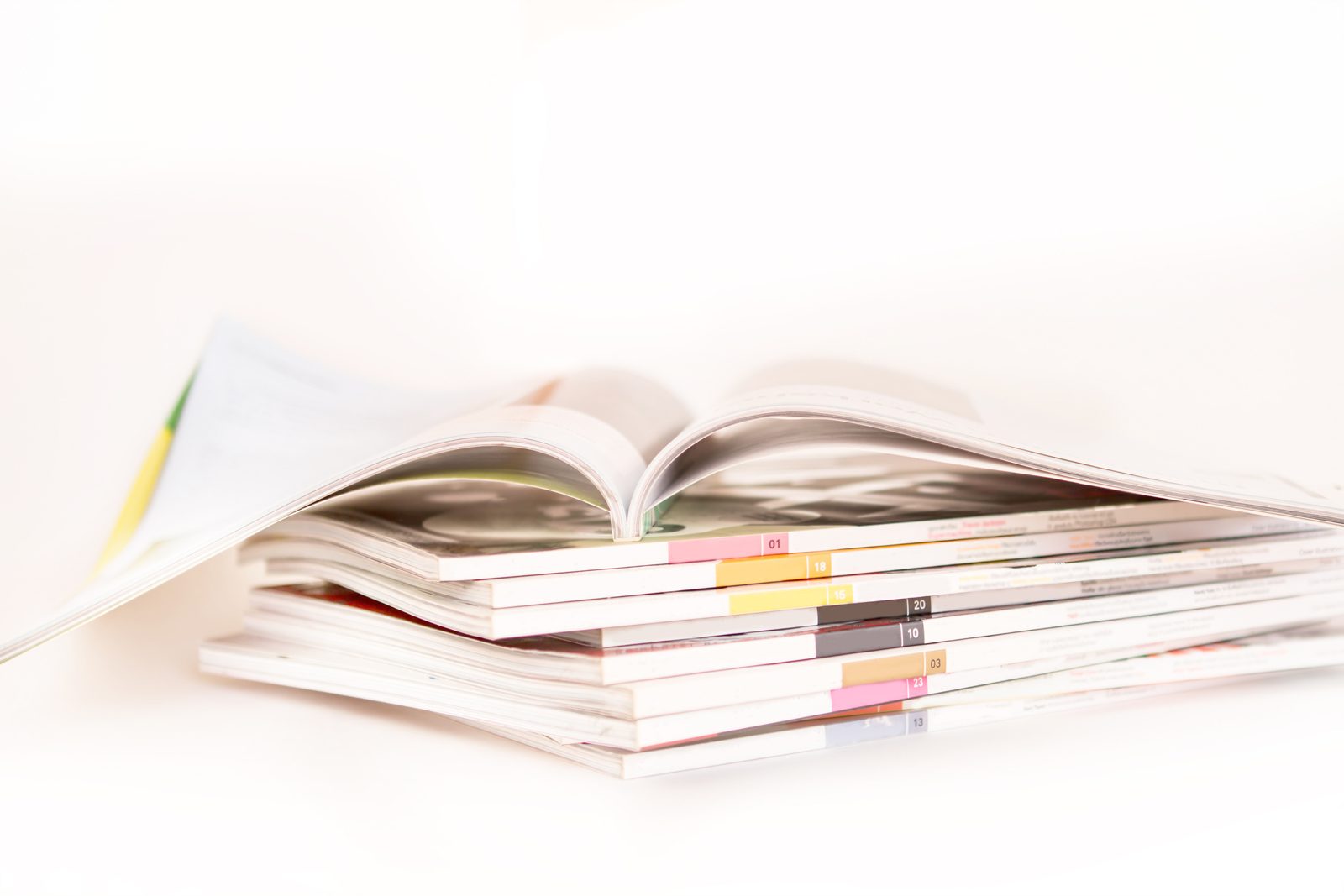
Perfect binding glues the pages into a wrap-around cover, giving a flat, square spine like a paperback. It suits thicker documents such as catalogues, manuals and annual reports, and looks polished on a shelf or a reception desk.
The spine is a bonus: you can print the title and year on it, which makes reports easy to find in a bookcase. The trade-off is that perfect-bound booklets don’t lie flat, and they need enough pages for the glue to hold. That’s typically from around 28 to 40 pages, depending on the thickness of the paper. Spine width is the number of sheets (pages divided by two) multiplied by the thickness of one sheet, so heavier paper gives a wider spine with fewer pages.
Perfect binding usually costs more than saddle stitching, but the per-copy difference shrinks on larger runs.
Wire bound: when your booklet needs to lie flat
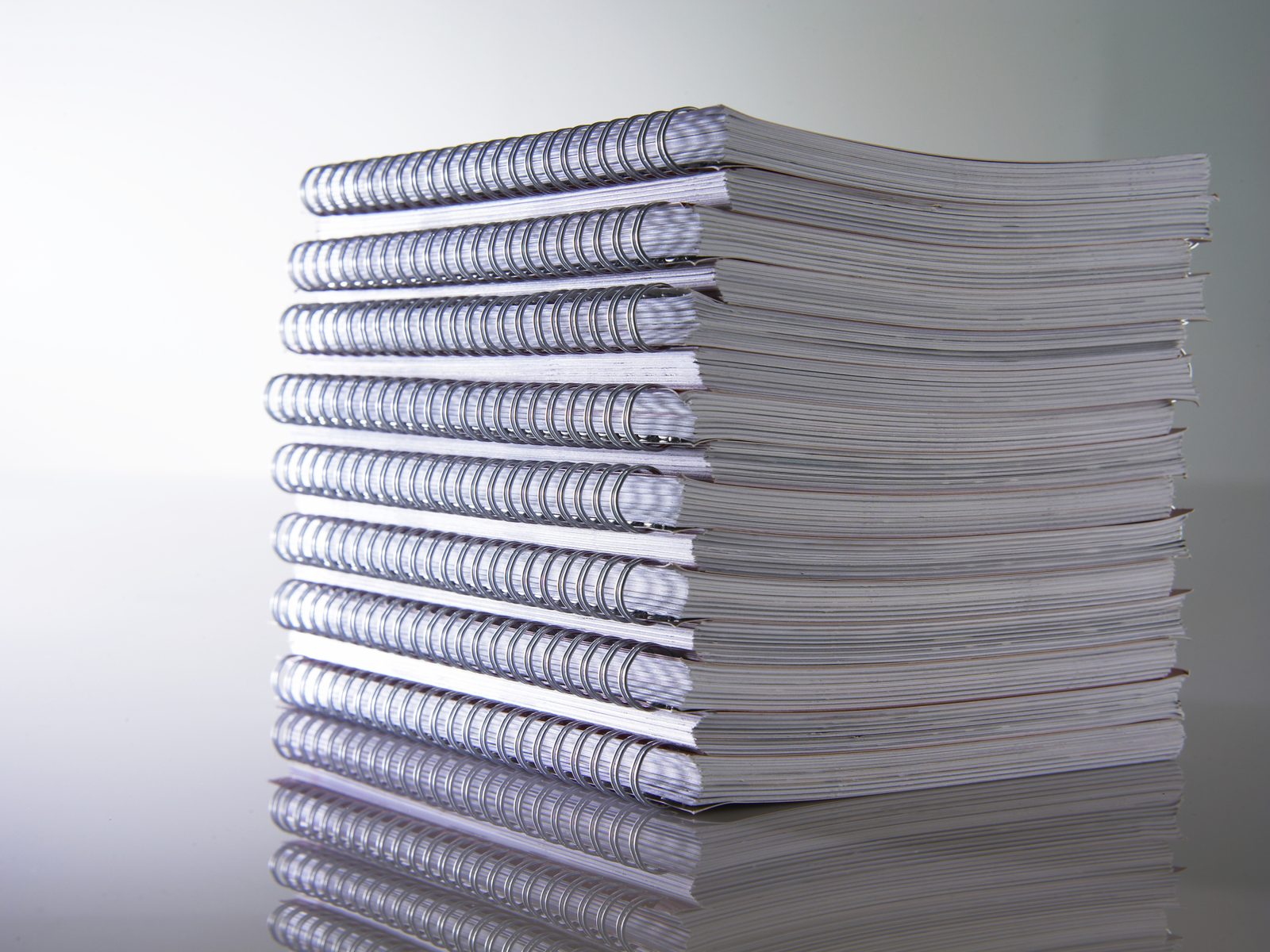
Wire binding punches holes along the spine edge and threads a wire coil through them. The booklet opens completely flat and can fold back on itself, which makes it ideal for anything used hands-free: training workbooks, manuals, recipe books and planners. Page counts just need to be even, not a multiple of four.
It’s practical rather than elegant, and the wire adds a non-paper material to recycle at end of life, so it’s best chosen when lying flat really matters.
How to choose: saddle stitch vs perfect bound in three questions
- How many pages do you have? If it’s a slim document in a multiple of four, saddle stitch is usually the answer. If it’s long, go perfect bound.
- How will people use it? If it needs to sit open on a desk or kitchen bench, choose wire bound.
- Where will it live? If it’ll sit on a shelf and represent your organisation for a year, the printed spine of a perfect-bound booklet earns its cost.
Does binding affect sustainability?
A little. Saddle stitching uses the least extra material: two small staples. Perfect binding adds glue, and wire binding adds a metal coil that should be removed before recycling. The bigger impact comes from paper choice and print quantity. Printing on 100% recycled stock and ordering only what you’ll use matters far more than staples versus glue. Our guide to choosing the right paper explains more.
Ready to print?
We offer saddle-stitched, perfect-bound and wire-bound booklet printing on 100% recycled EcoStar paper, with free delivery Australia-wide. Not sure which binding suits your project? Request a quote and we’ll recommend the best option. Before you send your file, read how to set up your booklet artwork for print.
- Eco-friendly booklet printing: 9 ways to reduce your impact
- How to set up your booklet artwork for print
- Saddle stitch vs perfect bound vs wire bound: which booklet binding is right for you?
- Wall Calendar vs Desk Calendar: Which Should Your Organisation Print?
- Eco Printing for Nonprofits: How to Reduce the Environmental Impact of Campaign Materials